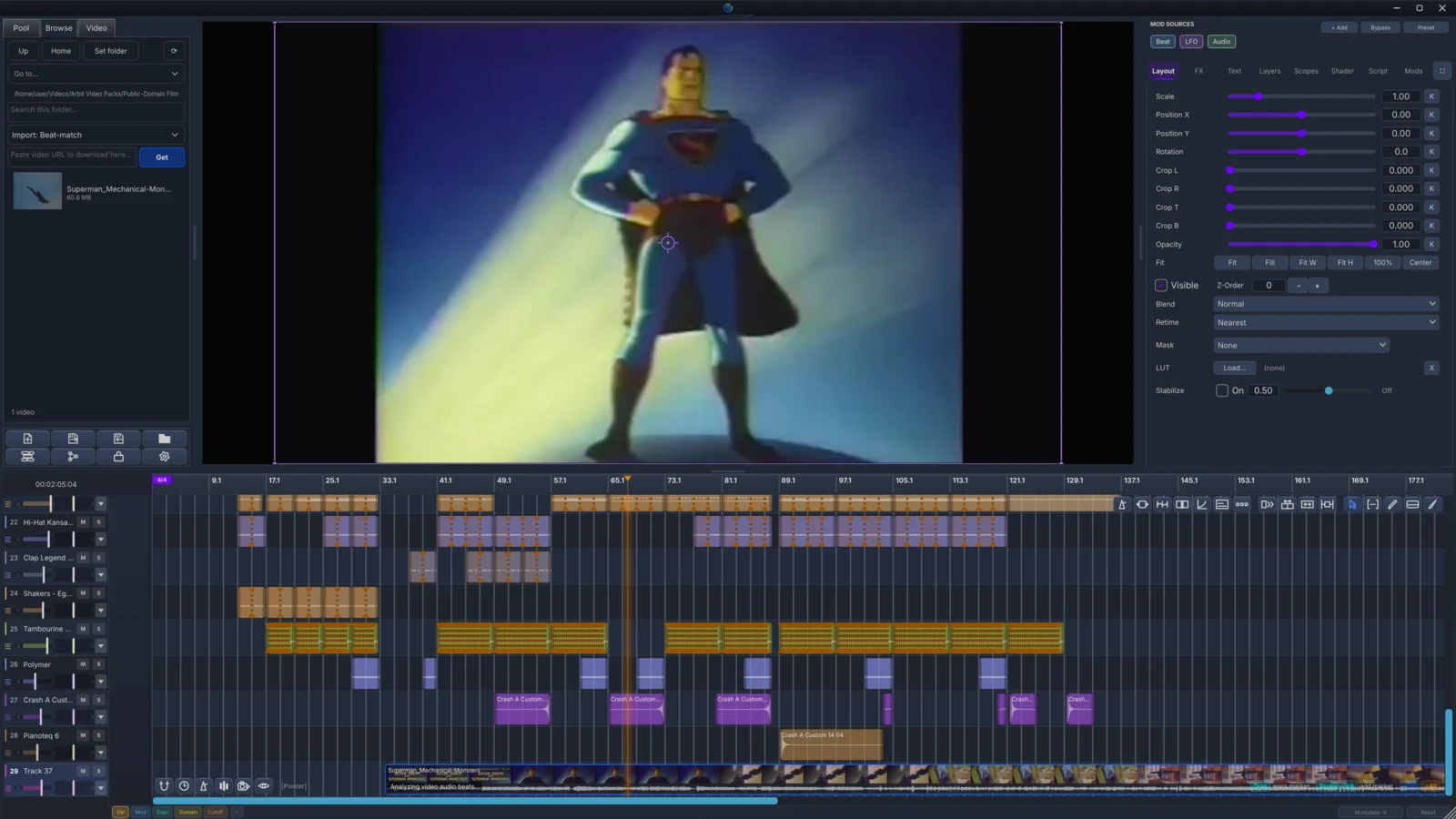
Video Editor
Cut the picture on the same beat grid.
Edit clips, multicam cuts, effects, text, transitions, and exports on the music project's shared timeline.
A real NLE beside the musical arrangement
Arrange clips, retime edits to musical structure, switch multicam angles, grade and finish the composite, and preview the result against project time.
- ArrangeVideo · image · generator clips
- RetimeBeat warp · speed ramp · interpolation
- FinishColor · LUT · text · loudness · export
Musical timing is native
Video clips and automation use the same beat timeline as notes and audio.
Deep editing paths
Masks, speed ramps, stabilization, roto, proxies, and cache controls remain editable project state.
Retiming & Beat Warp
Detect source beats, fit them to project time, draw speed ramps, preserve audio pitch, and choose nearest, frame-blend, or Speed Warp interpolation.
- Source beat detection and project-grid fitting
- Pitch-preserved speed ramps
- Nearest, Frame Blend, and Speed Warp interpolation
Video Finishing
Grade with effects and LUTs, finish overlays and loudness, inspect the composited result, and export finished video or a conform for another editor.
- Effects, LUTs, and composited overlays
- Loudness and visual inspection
- Finished video and conform export